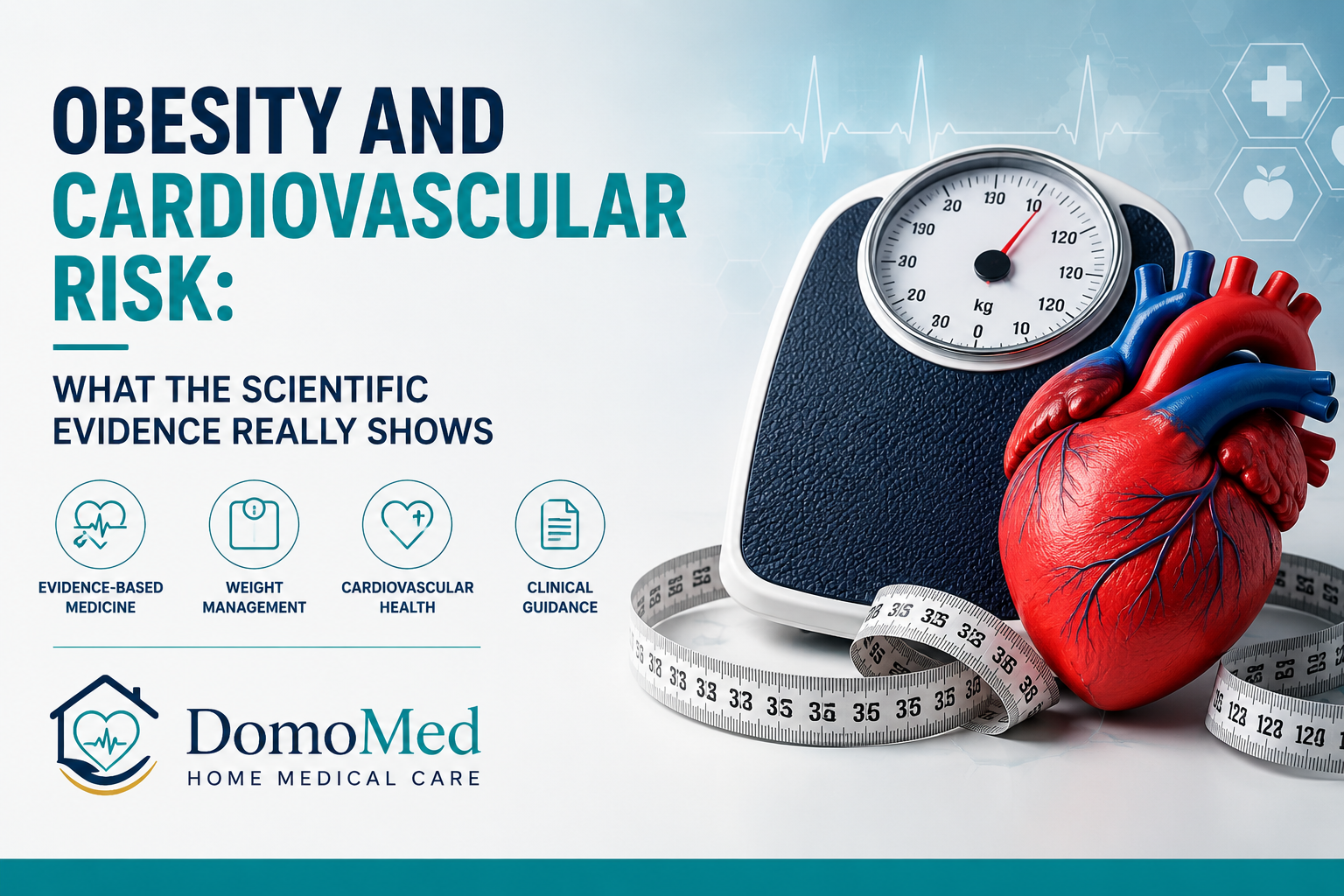
Obesity is not simply a cosmetic concern or a matter of carrying “a few extra pounds”. It is a chronic and complex medical condition that can increase the risk of heart disease, stroke and other serious health problems.
The connection between obesity and cardiovascular disease goes beyond the fact that people with excess weight are more likely to develop high blood pressure, type 2 diabetes or high cholesterol.
Excess body fat, particularly fat stored around the abdominal organs, can directly affect inflammation, metabolism, blood vessels and the structure and function of the heart.
This leads to an important question:
Can losing weight genuinely reduce the risk of a heart attack or stroke?
The answer depends on how weight loss is achieved, how much weight is lost and, most importantly, the individual cardiovascular risk of each patient.
How common is obesity?
Obesity has become increasingly common throughout the world.
A major international analysis published in The Lancet estimated that more than one billion people worldwide were living with obesity in 2022.
Body mass index, or BMI, is commonly used to identify overweight and obesity. However, BMI does not provide a complete picture.
The location of body fat also matters.
Fat stored around the abdominal organs, known as visceral fat, is particularly associated with metabolic abnormalities and cardiovascular risk. For this reason, waist circumference can provide useful information alongside BMI.
How does obesity affect the heart?
Obesity can affect cardiovascular health through several interconnected mechanisms.
Atherosclerosis, heart attack and stroke
Excess adipose tissue can promote chronic inflammation, insulin resistance, high blood pressure and abnormal cholesterol levels.
Over time, these factors can contribute to the development of atherosclerosis, a condition in which fatty plaques build up inside the arteries.
When a plaque affects an artery supplying the heart, it can lead to angina or a heart attack. When an artery supplying the brain becomes blocked, it can cause a stroke.
You can learn more about the warning symptoms of reduced blood flow to the heart in our guide:
Angina: How to Recognise the Warning Signs in Time
High LDL cholesterol is another important contributor to atherosclerosis. Our article on cholesterol explains how to interpret the different values shown in a lipid blood test:
High Cholesterol: What Your Test Results Mean and How to Protect Your Heart
High blood pressure
People living with obesity are more likely to develop high blood pressure.
The heart must work against greater resistance, while hormonal, kidney and metabolic changes associated with obesity may also contribute to increased blood pressure.
When hypertension remains untreated, it can damage the arteries and increase the risk of heart attack, stroke, kidney disease and heart failure.
Heart failure
Excess body weight increases the amount of work performed by the heart.
Over time, this may contribute to changes in the size, thickness and function of the heart muscle.
A higher BMI is associated with an increased risk of heart failure, including:
- Heart failure with reduced ejection fraction.
- Heart failure with preserved ejection fraction.
Obesity is particularly relevant in heart failure with preserved ejection fraction, where increased filling pressures, inflammation, high blood pressure, diabetes and sleep apnoea frequently coexist.
Atrial fibrillation
Obesity can promote enlargement of the atria, inflammation and the accumulation of fat around the heart.
These changes may increase the likelihood of developing atrial fibrillation, the most common sustained heart rhythm disorder.
Weight reduction may decrease the burden of atrial fibrillation and improve the results of catheter ablation in selected patients.
Sleep apnoea
Obstructive sleep apnoea is common in people with obesity.
Repeated interruptions in breathing during sleep can cause reduced oxygen levels, surges in blood pressure and increased stress on the cardiovascular system.
Untreated sleep apnoea is associated with hypertension, atrial fibrillation, heart failure and other cardiovascular complications.
Does losing weight reduce cardiovascular risk?
Weight loss can improve many of the factors associated with cardiovascular disease.
However, not every weight-loss intervention has demonstrated the same effect on heart attack, stroke or cardiovascular death.
The method used, the degree of weight loss and the patient’s existing medical conditions all matter.
Diet, exercise and lifestyle changes
Healthy eating, regular physical activity, adequate sleep and behavioural support remain the foundation of obesity treatment.
Lifestyle changes can improve:
- Blood pressure.
- Blood glucose levels.
- Cholesterol and triglycerides.
- Physical fitness.
- Mobility.
- Sleep apnoea.
- Quality of life.
- Metabolic inflammation.
However, the relationship between lifestyle-induced weight loss and major cardiovascular events is complex.
In the Look AHEAD trial, people with overweight or obesity and type 2 diabetes received either an intensive lifestyle intervention or standard care.
Although the intensive programme produced weight loss and several metabolic and quality-of-life benefits, it did not significantly reduce the rate of major cardiovascular events compared with standard care.
This does not mean that diet and exercise are ineffective or unimportant.
Lifestyle treatment remains essential, but it may not always produce enough sustained weight loss on its own to alter long-term cardiovascular outcomes, particularly in patients with established disease or severe obesity.
Bariatric surgery
Bariatric or metabolic surgery can produce substantial and long-lasting weight loss in appropriately selected patients.
The Swedish Obese Subjects study found that people who underwent bariatric surgery experienced fewer cardiovascular events and lower cardiovascular mortality than those receiving conventional obesity treatment.
However, this was not a randomised clinical trial.
Its results are important, but they should be interpreted with the limitations of observational research in mind.
Bariatric surgery may be considered when obesity is severe, lifestyle measures have not been sufficient and the expected benefits outweigh the surgical risks.
The decision requires an individual medical and surgical assessment.
Semaglutide and cardiovascular risk: what did the SELECT trial show?
The SELECT trial represented an important development in the treatment of obesity and cardiovascular disease.
It included 17,604 adults aged 45 years or older who had:
- Overweight or obesity, defined as a BMI of at least 27 kg/m².
- Established cardiovascular disease.
- No history of diabetes.
Participants received either subcutaneous semaglutide 2.4 mg once weekly or placebo, in addition to their usual cardiovascular treatment.
After an average follow-up of approximately 40 months, major cardiovascular events occurred in:
- 6.5% of participants receiving semaglutide.
- 8.0% of participants receiving placebo.
The primary outcome included cardiovascular death, non-fatal heart attack or non-fatal stroke.
This corresponded to:
- A 20% relative reduction in risk.
- An absolute reduction of 1.5 percentage points during follow-up.
Participants receiving semaglutide also achieved an average weight reduction of approximately 9.4% after 104 weeks.
The trial does not prove that the entire cardiovascular benefit came exclusively from weight loss.
Semaglutide may also influence inflammation, blood pressure, blood glucose regulation, vascular function and other cardiometabolic pathways.
Do the SELECT results apply to everyone with obesity?
No.
This distinction is very important.
SELECT involved people who already had cardiovascular disease but did not have diabetes.
Its findings should not automatically be applied to:
- Younger adults without cardiovascular disease.
- People receiving treatment solely for primary prevention.
- Every person with overweight or obesity.
- Every GLP-1 receptor agonist.
- Every weight-loss medication.
- Semaglutide doses different from those used in the study.
The most robust cardiovascular outcome evidence in people with obesity but without diabetes currently applies specifically to semaglutide 2.4 mg in patients with established cardiovascular disease and clinical characteristics similar to those enrolled in SELECT.
Semaglutide should therefore not be understood as a universal heart-protection medication for everyone wishing to lose weight.
Treatment must always be based on an individual medical assessment.
Does semaglutide also protect the kidneys?
A prespecified analysis of SELECT also examined kidney outcomes.
The composite kidney endpoint occurred in:
- 1.8% of patients receiving semaglutide.
- 2.2% of patients receiving placebo.
The findings suggest a possible kidney benefit, particularly through lower rates of macroalbuminuria and major deterioration in kidney function.
However, kidney outcomes were secondary endpoints rather than the primary purpose of the trial.
They should therefore be considered supportive evidence rather than proof that semaglutide should be prescribed primarily for kidney protection in this population.
What about tirzepatide?
Tirzepatide can produce substantial weight loss and improve several cardiometabolic risk factors.
However, improvements in weight, blood pressure, glucose control or cholesterol should not automatically be interpreted as proof of a reduction in heart attacks, strokes or cardiovascular death.
Cardiovascular outcome evidence must be assessed separately for each medication, dose and patient population.
Patients interested in the differences between current weight-management treatments can read:
Losing Weight Is Not Just About Willpower: The Role of Medicine in Weight Management
For patients considering a medically supervised programme in Spain, we also explain how our assessment and follow-up process works:
Semaglutide at Home in Madrid: How the Metabolic Care Programme Works
Who may benefit most from medically supervised weight loss?
The potential benefits of treatment depend on the individual patient.
Medical weight management may be particularly relevant for people with obesity or overweight who also have:
- High blood pressure.
- High cholesterol.
- Type 2 diabetes or prediabetes.
- Sleep apnoea.
- Fatty liver disease.
- Established cardiovascular disease.
- Reduced mobility.
- A strong family history of cardiovascular disease.
- Previous unsuccessful attempts to achieve sustained weight loss.
The purpose of medical treatment is not simply to reach a particular number on the scale.
The broader goals may include:
- Reducing waist circumference.
- Improving blood pressure.
- Improving glucose control.
- Reducing cardiovascular risk factors.
- Improving mobility and physical capacity.
- Treating sleep apnoea.
- Improving quality of life.
- Supporting long-term weight maintenance.
Is BMI enough to assess cardiovascular risk?
BMI is useful, but it should not be used in isolation.
Two people with the same BMI may have very different levels of cardiovascular and metabolic risk.
A comprehensive assessment may also consider:
- Waist circumference.
- Blood pressure.
- Blood glucose and HbA1c.
- LDL and non-HDL cholesterol.
- Triglycerides.
- Smoking.
- Family history.
- Physical activity.
- Sleep quality.
- Symptoms suggesting cardiovascular disease.
- Previous heart attack, stroke or peripheral artery disease.
In some patients, an electrocardiogram or additional cardiovascular testing may also be appropriate.
What does this evidence mean in practice?
Several practical conclusions can be drawn from the available evidence.
Obesity should be treated as a chronic medical condition and an important contributor to cardiovascular risk, not simply as a cosmetic issue.
Healthy eating, physical activity, sleep and behavioural changes remain the foundations of treatment.
However, some patients may require medication, bariatric surgery or a combination of different strategies to achieve meaningful and sustained weight loss.
Semaglutide 2.4 mg has demonstrated a reduction in major cardiovascular events in a specific group of patients with established cardiovascular disease, overweight or obesity and no diabetes.
This result should not be interpreted as a recommendation to prescribe semaglutide to every person with excess weight.
Treatment decisions must consider:
- Medical history.
- Cardiovascular risk.
- Current medication.
- Kidney and liver function.
- Contraindications.
- Potential side effects.
- Previous weight-loss attempts.
- Personal treatment goals.
- The ability to continue long-term follow-up.
How we approach obesity at DomoMed Salud
At DomoMed Salud, we provide an individualised medical assessment for people with overweight or obesity and associated cardiometabolic risk.
Depending on the patient’s needs, the assessment may include:
- A detailed medical and cardiovascular history.
- Review of current medication.
- Weight, height and BMI calculation.
- Waist circumference.
- Blood pressure and heart rate.
- Review of recent blood test results.
- A 12-lead electrocardiogram during the home programme.
- Assessment of whether medical weight-loss treatment is appropriate.
- Individualised treatment recommendations.
- Regular in-person or online follow-up.
Holter monitoring or ambulatory blood pressure monitoring may be recommended when clinically indicated, although these tests are not routinely required for every patient beginning weight-management treatment.
Our aim is not simply to lower the number on the scale.
We focus on improving cardiometabolic health, identifying associated risk factors and establishing a treatment plan that is safe, realistic and sustainable.
DomoMed Salud offers:
- Home medical assessments in Madrid and nearby areas.
- Online medical weight-management consultations throughout Spain.
- Consultations in English for international residents, expatriates and visitors.
- Structured follow-up during medical weight-loss treatment.
To discuss your weight, cardiovascular risk or treatment options, you can contact DomoMed Salud to arrange a home consultation in Madrid or an online medical assessment.
Frequently asked questions
Can obesity damage the heart even if I do not have diabetes?
Yes.
Diabetes increases cardiovascular risk, but obesity can also affect the heart through high blood pressure, inflammation, sleep apnoea, abnormal cholesterol levels and direct structural changes.
Some people with obesity develop cardiovascular disease even without diabetes.
How much weight do I need to lose to improve my health?
There is no single target that applies to everyone.
Even moderate weight loss can improve blood pressure, glucose control, triglycerides and mobility.
Greater weight loss may provide additional benefits, but the target should be safe, realistic and based on your medical profile.
Does losing weight prevent a heart attack?
Weight loss can improve several cardiovascular risk factors.
However, the ability of a particular treatment to prevent heart attacks or strokes must be demonstrated in clinical outcome trials.
Semaglutide 2.4 mg reduced major cardiovascular events in SELECT, but only in a specific population with established cardiovascular disease and no diabetes.
Is semaglutide suitable for everyone with obesity?
No.
Semaglutide is a prescription medication and is not appropriate for every patient.
A doctor should assess the indication, contraindications, possible adverse effects, current treatment and individual risk before prescribing it.
Should I have an ECG before starting weight-loss medication?
An ECG is not universally required before starting GLP-1–based treatment.
However, it may provide useful information in patients with cardiovascular symptoms, risk factors, rhythm concerns or previous heart disease.
At DomoMed Salud, a 12-lead ECG and cardiology report are included in the in-person Metabolic Care programme.
Is weight-loss medication a lifelong treatment?
Obesity is a chronic condition, and weight regain can occur after medication is stopped.
The duration of treatment depends on response, tolerance, medical indication, individual preferences and ongoing clinical assessment.
Medication should not be discontinued or changed without discussing it with the prescribing doctor.
Key messages
- Obesity is a chronic condition that can increase the risk of heart attack, stroke, heart failure and atrial fibrillation.
- Waist circumference and visceral fat provide additional information beyond BMI.
- Lifestyle changes remain essential but may not be sufficient for every patient.
- Bariatric surgery can provide substantial and sustained weight loss in selected individuals.
- Semaglutide 2.4 mg reduced cardiovascular events in people with established cardiovascular disease, overweight or obesity and no diabetes.
- These findings should not be extrapolated to every patient or every weight-loss medication.
- The safest approach is a personalised medical assessment focused on both weight and overall cardiovascular health.
References
Powell-Wiley TM, Poirier P, Burke LE, et al. Obesity and Cardiovascular Disease: A Scientific Statement From the American Heart Association. Circulation. 2021;143.
NCD Risk Factor Collaboration. Worldwide trends in underweight and obesity from 1990 to 2022. The Lancet. 2024;403:1027–1050.
Look AHEAD Research Group. Cardiovascular Effects of Intensive Lifestyle Intervention in Type 2 Diabetes. New England Journal of Medicine. 2013;369:145–154.
Sjöström L, Peltonen M, Jacobson P, et al. Bariatric Surgery and Long-term Cardiovascular Events. JAMA. 2012;307:56–65.
Lincoff AM, Brown-Frandsen K, Colhoun HM, et al. Semaglutide and Cardiovascular Outcomes in Obesity without Diabetes. New England Journal of Medicine. 2023;389:2221–2232.
Colhoun HM, Lingvay I, Brown PM, et al. Long-term Kidney Outcomes of Semaglutide in Obesity and Cardiovascular Disease in the SELECT Trial. Nature Medicine. 2024;30:2058–2066.
Medical disclaimer
This article is intended for general information and educational purposes only.
It does not replace an individual medical assessment, diagnosis or treatment plan.
Weight-loss medication must always be prescribed and monitored by a qualified healthcare professional. Seek urgent medical attention if you experience severe or persistent chest pain, sudden breathlessness, fainting or symptoms suggestive of a heart attack or stroke.