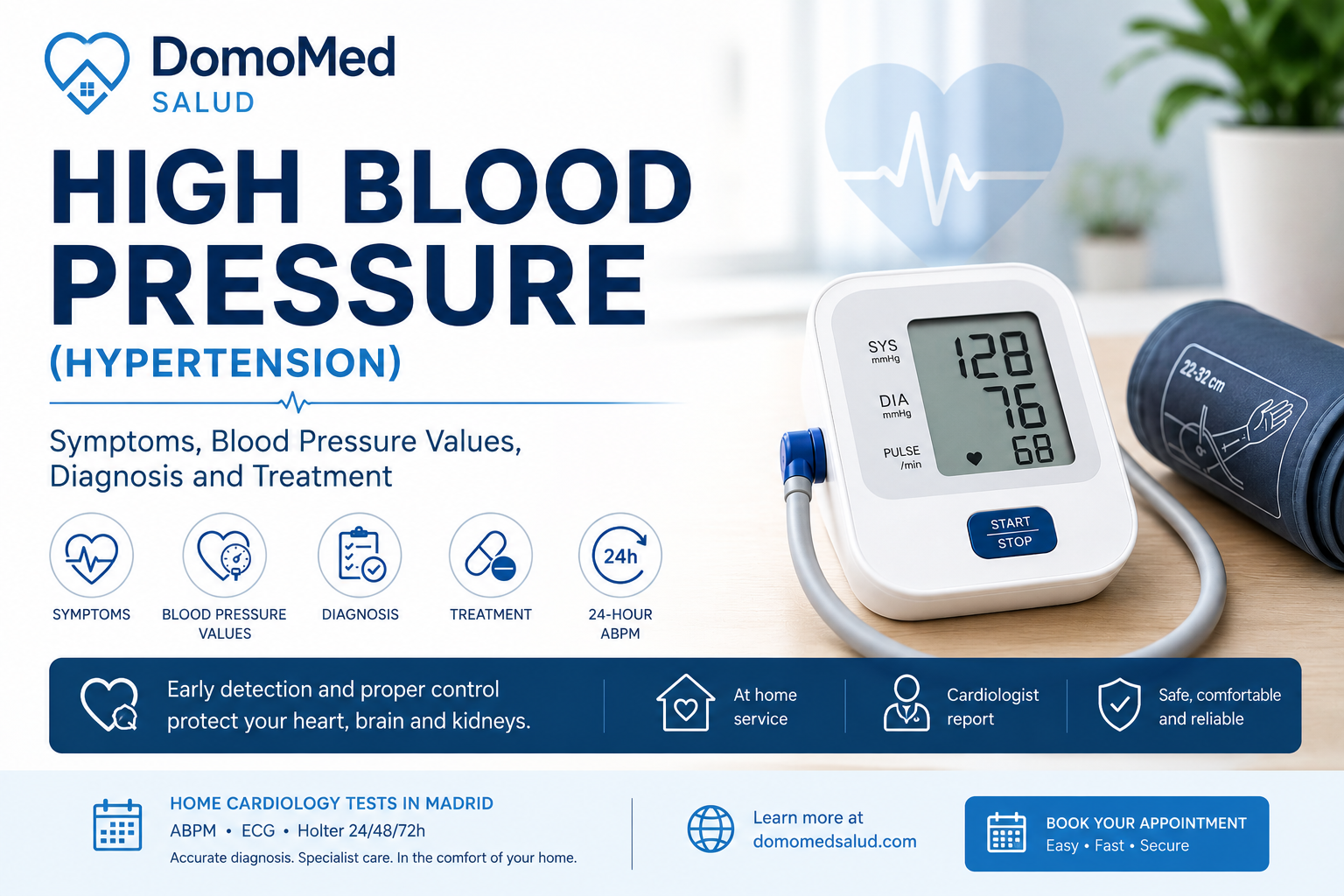
High blood pressure, also known as hypertension, is one of the leading risk factors for heart attack, stroke, heart failure, atrial fibrillation and chronic kidney disease worldwide.
The challenge is that hypertension usually develops silently. Many people have elevated blood pressure for years without experiencing any symptoms, which is why it is often referred to as the “silent killer.”
The only reliable way to detect hypertension is to measure blood pressure correctly and confirm that elevated readings persist over time or are present outside the medical office.
Recent European guidelines have reinforced three essential concepts:
- A single blood pressure measurement is often not enough to diagnose hypertension.
- Many patients benefit from achieving lower blood pressure targets than previously recommended.
- Treatment should always be individualised according to cardiovascular risk, age, associated medical conditions and treatment tolerance.
In this article, we explain what hypertension is, how blood pressure should be measured, current treatment recommendations, and when 24-hour Ambulatory Blood Pressure Monitoring (ABPM) may be recommended.
What is high blood pressure?
Blood pressure is the force exerted by circulating blood against the walls of the arteries.
It is expressed using two numbers:
- Systolic blood pressure: the upper number, measured when the heart contracts and pumps blood.
- Diastolic blood pressure: the lower number, measured while the heart relaxes between heartbeats.
According to current European guidelines, hypertension is generally diagnosed when office blood pressure is 140/90 mmHg or higher, provided that elevated values are confirmed on repeated measurements or by out-of-office blood pressure monitoring.
The 2024 European Society of Cardiology (ESC) Guidelines introduced a new category called Elevated Blood Pressure, defined as:
120–139 mmHg systolic or 70–89 mmHg diastolic.
This does not mean that everyone within this range requires medication. Instead, it helps identify individuals who may benefit from lifestyle modifications and closer cardiovascular risk assessment before developing established hypertension.
Current blood pressure classification
| Category | Office Blood Pressure |
|---|---|
| Normal blood pressure | Less than 120/70 mmHg |
| Elevated blood pressure | 120–139 / 70–89 mmHg |
| Hypertension | 140/90 mmHg or higher |
A single elevated reading is not enough to diagnose hypertension.
Blood pressure varies throughout the day and can be influenced by:
- Physical activity
- Emotional stress
- Pain
- Caffeine intake
- Certain medications
- Incorrect measurement technique
Why is hypertension dangerous?
Persistently elevated blood pressure gradually damages blood vessels and several vital organs.
If left untreated, hypertension significantly increases the risk of:
- Heart attack
- Stroke
- Heart failure
- Atrial fibrillation
- Chronic kidney disease
- Peripheral arterial disease
- Vascular dementia
- Retinal damage and vision problems
Cardiovascular risk depends not only on blood pressure itself but also on the presence of:
- Diabetes
- High cholesterol
- Smoking
- Obesity
- Chronic kidney disease
- Previous cardiovascular disease
- Family history
What are the symptoms of hypertension?
Most people with hypertension experience no symptoms at all.
When symptoms occur, they may include:
- Headache
- Dizziness
- Palpitations
- Fatigue
- A feeling of pressure in the head
However, none of these symptoms is specific to hypertension, and many people with dangerously high blood pressure feel completely well.
For this reason, routine blood pressure checks are essential, even in people without symptoms.
If high blood pressure is accompanied by:
- Chest pain
- Shortness of breath
- Sudden weakness
- Difficulty speaking
- Confusion
- Loss of consciousness
- Visual disturbances
urgent medical assessment is required.
How should blood pressure be measured?
To obtain reliable blood pressure readings:
- Avoid smoking, exercise and caffeine for at least 30 minutes beforehand.
- Empty your bladder before measurement.
- Sit quietly for about five minutes.
- Keep your back supported.
- Place both feet flat on the floor.
- Do not cross your legs.
- Position the cuff on your bare upper arm at heart level.
- Use an appropriately sized cuff.
- Avoid talking during the measurement.
- Take at least two readings separated by approximately one minute.
During the initial assessment, blood pressure should be measured in both arms.
Future measurements are generally performed on the arm with the consistently higher reading.
Why isn’t a clinic blood pressure reading always enough?
Blood pressure measured during a medical appointment does not always reflect a person’s usual blood pressure.
Two common situations illustrate this:
White-coat hypertension
Blood pressure is elevated in the clinic but normal at home.
Although cardiovascular risk is generally lower than in sustained hypertension, regular follow-up is still recommended.
Masked hypertension
Blood pressure appears normal in the clinic but is elevated during everyday activities or while sleeping.
This condition may remain undetected for years and is associated with an increased cardiovascular risk.
For this reason, current guidelines strongly recommend out-of-office blood pressure monitoring whenever appropriate.
What is Ambulatory Blood Pressure Monitoring (ABPM)?
Ambulatory Blood Pressure Monitoring (ABPM) is considered the most accurate method for assessing blood pressure over a 24-hour period.
A small portable monitor automatically records blood pressure while the patient goes about their normal daily activities and during sleep.
ABPM provides valuable information including:
- Average 24-hour blood pressure
- Daytime blood pressure
- Night-time blood pressure
- Nocturnal blood pressure dipping
- Blood pressure variability
- White-coat hypertension
- Masked hypertension
- Response to antihypertensive treatment
At DomoMed Salud, we provide 24-hour Ambulatory Blood Pressure Monitoring (ABPM) at home in Madrid, together with other home-based cardiology diagnostic tests. The monitor is fitted in the patient’s home, and every study is reviewed and reported by a cardiologist.
When is 24-hour ABPM recommended?
Ambulatory Blood Pressure Monitoring (ABPM) is particularly useful in the following situations:
- Elevated blood pressure readings in the clinic requiring confirmation.
- Significant differences between office and home blood pressure measurements.
- Suspected white-coat hypertension.
- Suspected masked hypertension.
- Highly variable blood pressure readings.
- Assessing whether treatment controls blood pressure throughout the day and night.
- Episodes of dizziness or suspected low blood pressure.
- Suspected nocturnal hypertension.
- Blood pressure that remains elevated despite multiple medications.
- Patients with diabetes, chronic kidney disease, sleep apnoea or a high cardiovascular risk.
ABPM is also recommended before diagnosing resistant hypertension.
ABPM vs Home Blood Pressure Monitoring (HBPM)
Although both methods measure blood pressure outside the clinic, they are not the same.
Ambulatory Blood Pressure Monitoring (ABPM)
- Automatically records blood pressure over 24 hours.
- Measures blood pressure during normal daily activities and sleep.
- Assesses nocturnal blood pressure and circadian patterns.
- Considered the gold standard for confirming hypertension.
Home Blood Pressure Monitoring (HBPM)
HBPM involves patients measuring their own blood pressure at home using a validated blood pressure monitor.
Most healthcare professionals recommend taking two readings in the morning and two in the evening over several consecutive days.
HBPM is an excellent tool for long-term monitoring but cannot evaluate blood pressure during sleep.
Current blood pressure targets
The 2024 ESC Guidelines recommend aiming for a systolic blood pressure between 120 and 129 mmHg in most adults receiving antihypertensive treatment, provided that the target is well tolerated.
However, treatment should always be individualised.
Less intensive targets may be appropriate in patients with:
- Advanced age
- Frailty
- Symptomatic orthostatic hypotension
- Falls or dizziness related to treatment
- Significant adverse effects
- Limited life expectancy
- Multiple comorbidities
The goal is not to achieve the lowest possible blood pressure, but rather the level that offers the greatest cardiovascular protection with the lowest risk of side effects.
Why are lower blood pressure targets now recommended?
Several large clinical trials have shown that more intensive blood pressure control reduces cardiovascular events in selected patients.
Among the most influential studies are:
- SPRINT Trial
- STEP Trial
- ESPRIT Trial
- BPROAD Trial
Overall, these studies demonstrated reductions in heart attacks, strokes and cardiovascular mortality in patients achieving lower systolic blood pressure targets.
Nevertheless, intensive treatment is not suitable for everyone, highlighting the importance of individualised medical care.
Lifestyle changes remain the foundation of treatment
Medication is only one part of hypertension management.
Healthy lifestyle habits remain essential.
Reduce salt intake
Limiting sodium intake helps lower blood pressure and improves cardiovascular health.
Processed foods, ready meals, cured meats and salty snacks are major sources of hidden salt.
Maintain a healthy body weight
Weight loss is one of the most effective non-pharmacological strategies for reducing blood pressure.
It also improves diabetes, cholesterol levels and obstructive sleep apnoea.
Exercise regularly
Current guidelines recommend combining:
- Aerobic exercise
- Strength training
- Reduced sedentary time
Exercise programmes should always be adapted to the individual’s health status.
Limit alcohol consumption
Excessive alcohol intake contributes to uncontrolled hypertension.
Stop smoking
Although smoking does not directly cause sustained hypertension, quitting dramatically reduces the risk of heart attack, stroke and vascular disease.
Follow a heart-healthy diet
A Mediterranean-style diet rich in:
- Vegetables
- Fruits
- Whole grains
- Legumes
- Fish
- Nuts
is associated with better blood pressure control and lower cardiovascular risk.
Medications used to treat hypertension
The main classes of antihypertensive medications include:
- ACE inhibitors (ACEIs)
- Angiotensin receptor blockers (ARBs)
- Calcium channel blockers
- Thiazide or thiazide-like diuretics
Many patients benefit from starting treatment with two medications combined into a single tablet, improving both effectiveness and adherence.
Beta-blockers remain an important option for patients with:
- Coronary artery disease
- Heart failure
- Certain cardiac arrhythmias
- Other specific clinical indications
Medication should always be prescribed and adjusted by a healthcare professional.
Hypertension and chronic kidney disease
Hypertension and chronic kidney disease frequently coexist and often worsen each other.
ACE inhibitors and ARBs remain first-line treatments in patients with albuminuria whenever possible.
Newer therapies such as:
- SGLT2 inhibitors
- Finerenone
provide additional cardiovascular and renal protection in selected patients with chronic kidney disease and type 2 diabetes.
What is resistant hypertension?
Resistant hypertension is suspected when blood pressure remains above target despite treatment with three different antihypertensive medications at appropriate doses, including a diuretic.
Before confirming resistant hypertension, doctors should exclude:
- Poor medication adherence
- Incorrect blood pressure measurements
- White-coat hypertension
- Secondary causes of hypertension
- Sleep apnoea
- Kidney disease
- Excessive salt intake
- Drug-induced hypertension
A 24-hour ABPM study is often essential before confirming the diagnosis.
Renal denervation
Renal denervation is a minimally invasive catheter-based procedure designed to reduce sympathetic nerve activity surrounding the renal arteries.
Recent sham-controlled clinical trials have demonstrated that renal denervation can provide additional blood pressure reduction in carefully selected patients.
Major studies include:
- SPYRAL HTN-OFF MED
- SPYRAL HTN-ON MED
- RADIANCE-HTN SOLO
- RADIANCE-HTN TRIO
Renal denervation is not considered first-line treatment.
It may be appropriate for selected patients with persistent uncontrolled hypertension despite optimal medical therapy.
Frequently Asked Questions
What blood pressure is considered normal?
According to the 2024 ESC Guidelines, office blood pressure below 120/70 mmHg is classified as non-elevated.
However, blood pressure targets always depend on age, cardiovascular risk and individual circumstances.
Is 130/80 mmHg considered hypertension?
Under current European guidelines, 130/80 mmHg is not classified as hypertension.
Instead, it falls into the category of elevated blood pressure, highlighting the importance of lifestyle modification and cardiovascular risk assessment.
Which blood pressure number is more important: systolic or diastolic?
Both numbers are important.
However, systolic blood pressure (the upper number) becomes the strongest predictor of cardiovascular events from middle age onwards.
High systolic blood pressure is more strongly associated with heart attack, stroke, heart failure and kidney disease.
Nevertheless, elevated diastolic pressure is also clinically important, particularly in younger adults.
Examples:
- 150/75 mmHg = isolated systolic hypertension.
- 125/95 mmHg = isolated diastolic hypertension.
Neither reading should be considered normal.
Is home blood pressure monitoring reliable?
Yes.
Home monitoring provides valuable information when performed with a validated device and correct measurement technique.
What is the difference between a home blood pressure monitor and ABPM?
A home monitor provides occasional readings.
ABPM automatically measures blood pressure throughout the day and night, allowing doctors to detect nocturnal hypertension, white-coat hypertension and masked hypertension.
Can hypertension be cured?
Some secondary forms of hypertension can improve once the underlying cause has been treated.
Most cases, however, require lifelong management through healthy lifestyle habits, medication and regular follow-up.
Can I stop taking my medication once my blood pressure is normal?
No.
Normal blood pressure usually indicates that treatment is working.
Stopping medication without medical advice may allow blood pressure to rise again.
Accurate blood pressure measurement leads to better treatment
Effective hypertension management depends on understanding how blood pressure behaves throughout the day—not just during a single clinic visit.
At DomoMed Salud, we offer home cardiology testing in Madrid, including:
- 24-hour Ambulatory Blood Pressure Monitoring (ABPM)
- Electrocardiogram (ECG)
- 24, 48 and 72-hour Holter ECG monitoring
All studies are performed at the patient’s home and interpreted by an experienced cardiologist.
Medical disclaimer
This article is intended for educational purposes only and should not replace personalised medical advice, clinical assessment or treatment by a qualified healthcare professional.
Never start, stop or modify blood pressure medication without consulting your doctor.
If you experience chest pain, severe shortness of breath, sudden weakness, difficulty speaking, loss of consciousness or other severe symptoms, seek emergency medical care immediately.
At DomoMed Salud, we are committed to providing evidence-based, patient-centred cardiovascular care.
Thank you for trusting DomoMed Salud.
This article has been reviewed by the medical team at DomoMed Salud.