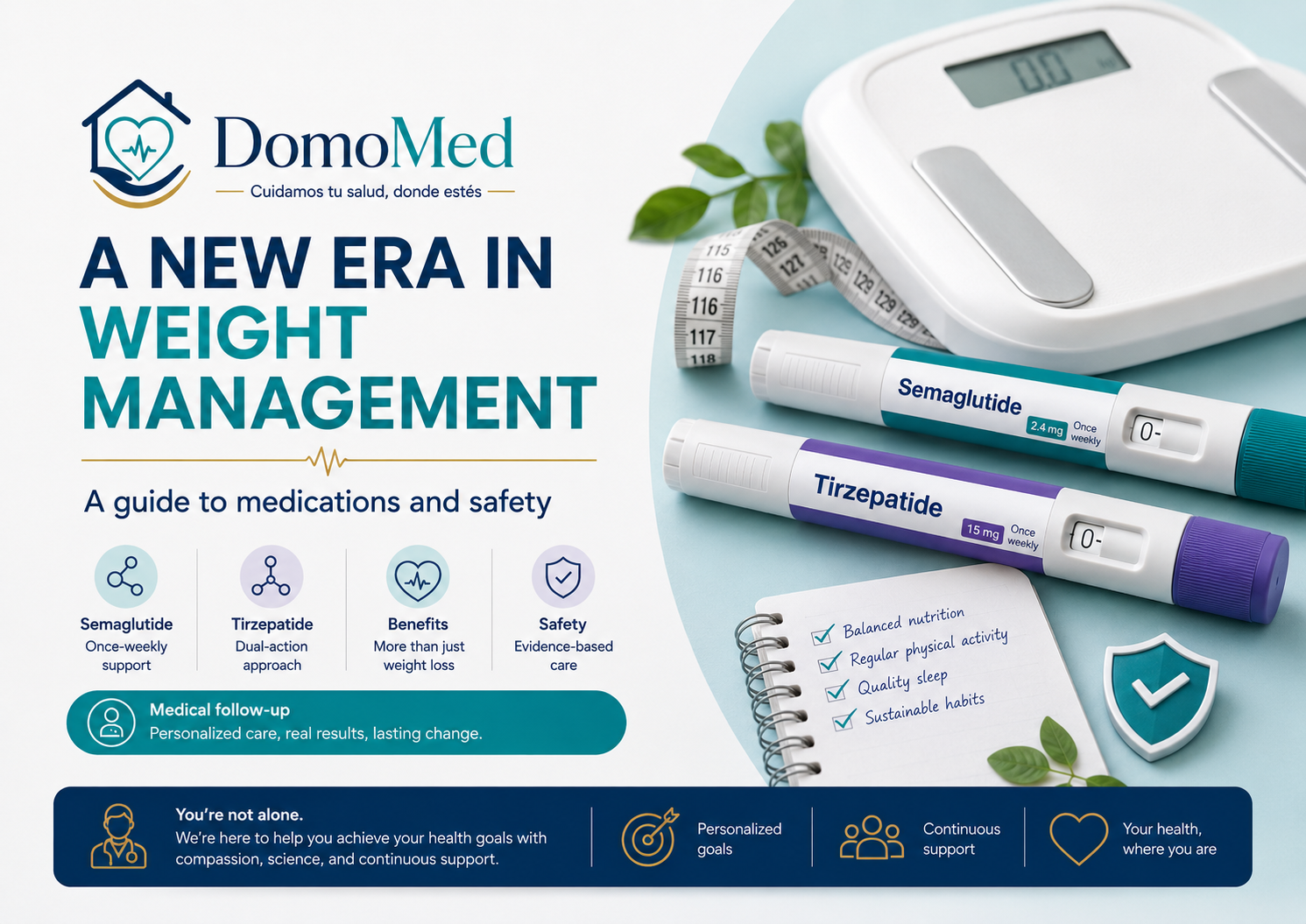
Weight-Loss Medications: Semaglutide, Tirzepatide and Safety
New weight-loss medications have significantly changed the medical treatment of obesity. However, they are not miracle solutions, purely cosmetic treatments or substitutes for healthy nutrition, physical activity and medical follow-up.
The most relevant treatments currently include semaglutide, tirzepatide and liraglutide. These medicines act on hormonal signals involved in appetite, satiety and metabolism and can lead to clinically meaningful weight loss when prescribed appropriately.
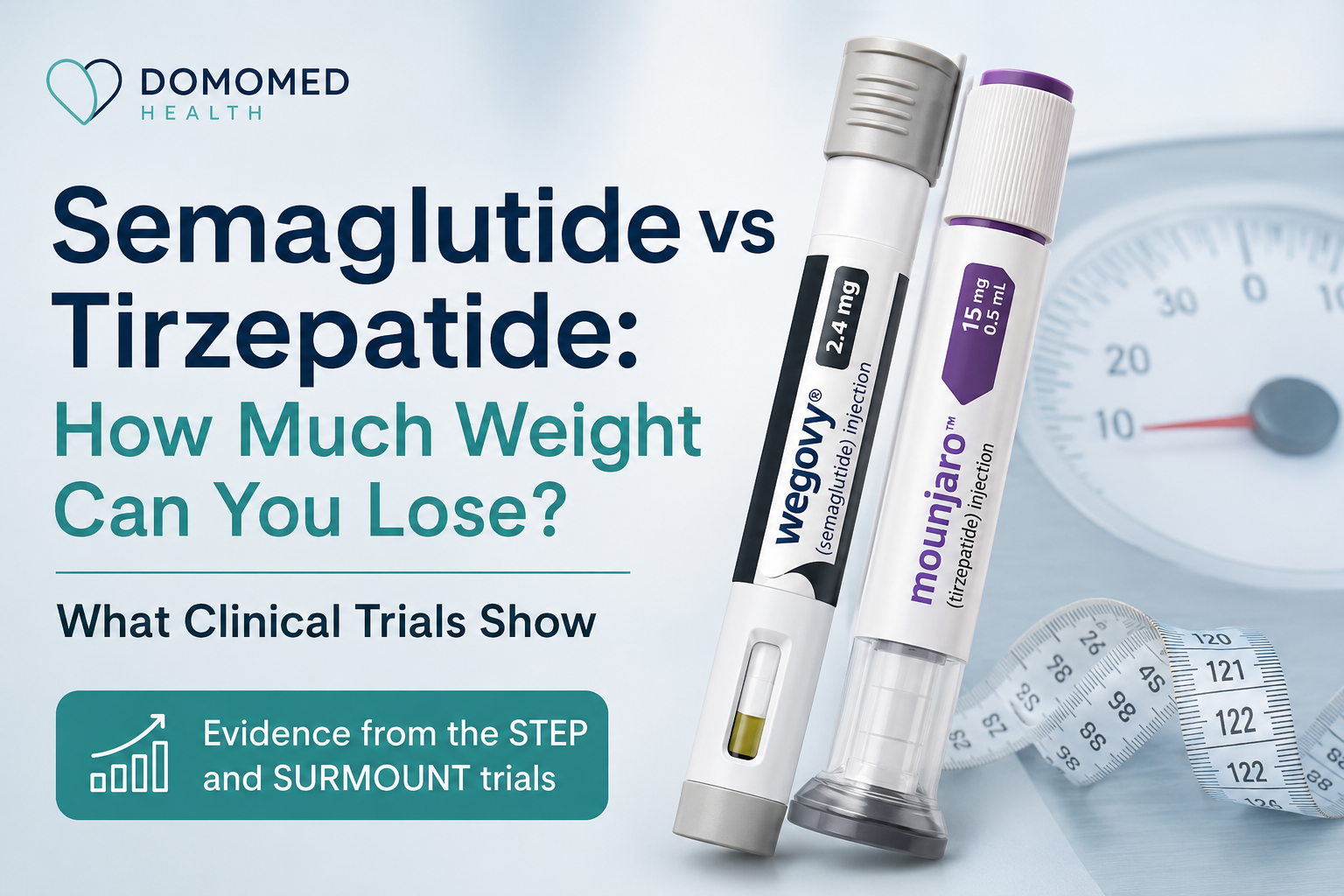
In Europe, semaglutide for weight management is marketed as Wegovy, while tirzepatide is marketed as Mounjaro. Zepbound is the brand used for tirzepatide for weight management in the United States.
In this guide, we explain how these medications work, who may be eligible, the differences between them, how much weight patients may lose and the main side effects, precautions and warning symptoms that should be considered.
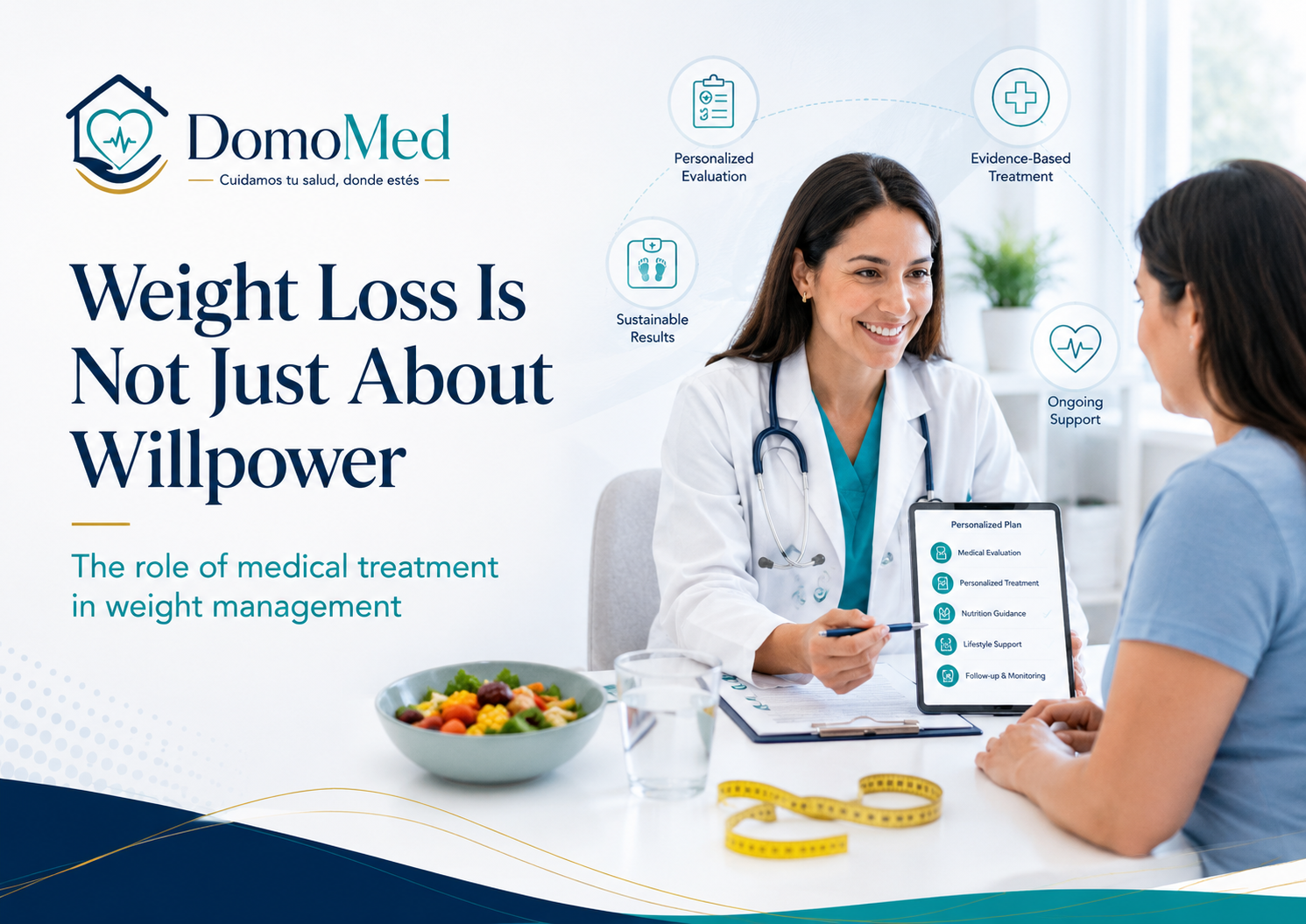
You can also read our guide on why losing weight is not simply a matter of willpower and when medical treatment may help.
What Are the New Weight-Loss Medications?
Obesity is a chronic, complex condition with a strong tendency to recur. Its development is influenced by genetic, hormonal, metabolic, psychological, social and environmental factors.
For this reason, treatment should not be limited to advising patients to “eat less and move more”. In some people, lifestyle changes may need to be supported by pharmacological treatment.
The medicines most widely used today belong to the group of incretin-based therapies:
- Semaglutide acts on the GLP-1 receptor.
- Liraglutide also acts on the GLP-1 receptor.
- Tirzepatide acts on both GIP and GLP-1 receptors.
These hormonal pathways are involved in the regulation of hunger, satiety, gastric emptying, insulin secretion and glucose metabolism.
Which Weight-Loss Medications Are Available?
Wegovy: Semaglutide
Wegovy contains semaglutide and is authorised in Europe for weight management in adults with obesity or overweight associated with certain health complications.
The injectable formulation is administered once a week using a gradual dose-escalation schedule.
The dose is increased progressively to improve gastrointestinal tolerance. Patients should not increase the dose without medical advice.
Mounjaro: Tirzepatide
Mounjaro contains tirzepatide and is authorised in Europe for type 2 diabetes and weight management in adults who meet the relevant clinical criteria.
It is administered as a once-weekly injection and also requires gradual dose escalation.
Saxenda: Liraglutide
Saxenda contains liraglutide, a GLP-1 receptor agonist administered once daily.
It can produce clinically relevant weight loss, although its average effectiveness is generally lower than that reported with semaglutide or tirzepatide.
Other Weight-Loss Medicines
Other treatment options include:
- Orlistat.
- Naltrexone/bupropion.
These medicines may remain useful for selected patients, but they currently tend to have a more limited role because of their lower average efficacy, tolerability or contraindications.
Current European obesity-management frameworks prioritise semaglutide and tirzepatide in many clinical situations. However, treatment selection must always be individualised according to associated health conditions, safety, availability and therapeutic goals.
Wegovy, Ozempic, Mounjaro and Zepbound: Important Differences
Patients often confuse the active ingredient with the brand name.
Semaglutide Brands
- Wegovy: authorised for weight management.
- Ozempic: authorised for type 2 diabetes.
- Rybelsus: oral semaglutide authorised for type 2 diabetes.
Although these medicines contain semaglutide, they are not automatically interchangeable and do not have exactly the same authorised indications.
Ozempic is not the semaglutide formulation specifically authorised in Europe for treating obesity in patients without diabetes.
Tirzepatide Brands
- Mounjaro: the brand used in Europe for type 2 diabetes and weight management.
- Zepbound: the brand authorised in the United States for chronic weight management.
The medication selected should comply with the authorised indication in the country where it is prescribed.
How Do Semaglutide and Tirzepatide Work?
These medicines do not burn fat directly.
Their main effect is to modify biological signals involved in hunger, food intake and metabolism.
Effects on the Brain
They act on areas of the brain involved in appetite and satiety and may:
- Reduce hunger.
- Decrease persistent thoughts about food.
- Make smaller portions easier to tolerate.
- Prolong the feeling of fullness after eating.
Effects on the Digestive System
They slow gastric emptying, particularly during the early stages of treatment.
This contributes to satiety but also explains common side effects such as:
- Nausea.
- Early fullness.
- Acid reflux.
- Abdominal discomfort.
- Vomiting.
Effects on Glucose Metabolism
They increase insulin secretion when blood glucose is elevated and reduce inappropriate glucagon secretion.
These effects are particularly relevant in patients with prediabetes or type 2 diabetes.
Semaglutide vs Tirzepatide: What Is the Difference?
Semaglutide acts on the GLP-1 receptor alone.
Tirzepatide has a dual action on GIP and GLP-1 receptors.
In clinical trials, tirzepatide has produced greater average weight loss than semaglutide.
In the SURMOUNT-5 trial, which directly compared both treatments in adults with obesity without diabetes, average weight loss at 72 weeks was approximately:
- 20.2% with tirzepatide.
- 13.7% with semaglutide.
Tirzepatide also produced a greater average reduction in waist circumference.
However, this does not mean tirzepatide is automatically the best option for every patient.
The choice depends on:
- The authorised indication.
- Cardiovascular risk.
- The presence of diabetes.
- Obesity-related complications.
- Gastrointestinal tolerance.
- Current medication.
- Medical history.
- Cost and availability.
- Patient preferences.
You can read a more detailed comparison in our article How Much Weight Can You Lose with Semaglutide or Tirzepatide? What Clinical Trials Show.
How Much Weight Can You Lose?
Results depend on the medication, the dose reached and tolerated, treatment duration, adherence and the individual characteristics of the patient.
In the STEP 1 trial, semaglutide 2.4 mg produced an average reduction of approximately 14.9% of starting body weightafter 68 weeks.
In SURMOUNT-1, tirzepatide produced average weight reductions of approximately:
- 15% with 5 mg.
- 19.5% with 10 mg.
- 20.9% with 15 mg.
The exact figures may vary according to the statistical analysis and the population studied.
These results are averages from clinical trials and do not guarantee that every patient will achieve the same degree of weight loss.
Some patients lose more weight, while others experience a smaller response or are unable to tolerate higher doses.
Who May Be Eligible for These Medications?
In general, medicines authorised for weight management may be considered in adults with:
- A BMI of 30 kg/m² or higher.
- A BMI of 27 kg/m² or higher but below 30 kg/m² when at least one weight-related health complication is present.
These complications may include:
- High blood pressure.
- Dyslipidaemia or high cholesterol.
- Prediabetes.
- Type 2 diabetes.
- Obstructive sleep apnoea.
- Established cardiovascular disease.
- Other metabolic complications associated with excess weight.
BMI should not be the only criterion considered.
The assessment should also include:
- Waist circumference.
- Body-fat distribution.
- Previous weight-loss attempts.
- Cardiovascular disease.
- Current medication.
- Nutritional status.
- Obesity-related complications.
- Patient expectations and treatment goals.
These treatments should not be used simply because someone wishes to lose a few kilograms for cosmetic reasons.
Who Should Not Use Them?
Treatment must always be assessed individually. In general, these medicines should not be used during pregnancy.
Semaglutide
Semaglutide should not be used during:
- Pregnancy.
- Breastfeeding.
- A pregnancy planned in the near future.
When pregnancy is planned, semaglutide should be discontinued at least two months in advance.
Tirzepatide
Tirzepatide should also not be used during pregnancy.
When pregnancy is planned, European product information recommends stopping treatment at least one month beforehand.
During breastfeeding, the decision should be based on the most recent product information and an individual assessment of benefits and risks.
Other Situations Requiring Caution
A particularly careful assessment is required in patients with:
- Previous pancreatitis.
- Severe gastroparesis.
- Significant gastrointestinal disease.
- Diabetic retinopathy.
- Kidney disease with a risk of dehydration.
- Treatment with insulin or sulfonylureas.
- A history of eating disorders.
- Planned surgery or anaesthesia.
- Simultaneous use of another medicine from the same therapeutic group.
Medullary Thyroid Cancer and MEN2
In the United States, the prescribing information for Wegovy and Zepbound includes a contraindication in patients with a personal or family history of medullary thyroid carcinoma or multiple endocrine neoplasia syndrome type 2, known as MEN2.
This contraindication is not expressed in the same way in the European product information for Wegovy and Mounjaro.
The American contraindication should therefore not be transferred automatically to the European context.
Nevertheless, relevant thyroid or endocrine history should always be discussed with the prescribing doctor before treatment begins.
Common Side Effects
The most frequent adverse effects are gastrointestinal:
- Nausea.
- Vomiting.
- Diarrhoea.
- Constipation.
- Early fullness.
- Abdominal discomfort.
- Abdominal bloating.
- Acid reflux.
- Marked reduction in appetite.
These symptoms are more common:
- At the beginning of treatment.
- After a dose increase.
- When the dose is increased too quickly.
- After large or high-fat meals.
In many patients, they are mild or moderate and improve over time.
The following measures may help:
- Eat smaller portions.
- Eat slowly.
- Avoid very large or high-fat meals.
- Maintain adequate hydration.
- Do not increase the dose while relevant symptoms persist.
- Contact the medical team before modifying the treatment schedule.
Risks and Warning Symptoms
Medical assessment should be requested if any of the following occur:
- Severe or persistent abdominal pain.
- Abdominal pain radiating to the back.
- Repeated vomiting.
- Inability to maintain adequate fluid intake.
- Signs of dehydration.
- Severe pain in the upper-right abdomen.
- Fever or jaundice.
- Difficulty breathing.
- Swelling of the face, lips or tongue.
- Sudden loss of vision.
- Rapid or significant deterioration in vision.
Pancreatitis and Gallbladder Disease
Acute pancreatitis is uncommon but should be considered when a patient develops severe and persistent abdominal pain, sometimes radiating towards the back.
Gallstones and gallbladder inflammation may also occur, particularly during rapid weight loss.
Not every episode of abdominal pain during treatment represents pancreatitis. However, severe or persistent symptoms require medical evaluation.
Dehydration and Kidney Function
Nausea, vomiting and diarrhoea can cause dehydration.
This may affect kidney function, particularly in:
- Older patients.
- People with previous kidney disease.
- Patients taking diuretics.
- People unable to maintain adequate fluid intake.
Medical advice should be requested if the patient develops:
- A significant reduction in urine output.
- Severe dizziness.
- Marked weakness.
- Inability to drink.
- Repeated vomiting.
NAION and Sudden Loss of Vision
NAION stands for non-arteritic anterior ischaemic optic neuropathy.
It occurs when part of the optic nerve receives insufficient blood flow and may cause sudden vision loss, usually in one eye.
In 2025, the European Medicines Agency concluded that NAION should be included as a very rare adverse effect of semaglutide.
If sudden loss of vision or a major visual change occurs, urgent ophthalmological assessment is required.
When NAION is confirmed, semaglutide should be discontinued following medical advice.
Do GLP-1 Medicines Increase the Risk of Suicide?
In April 2026, the United States Food and Drug Administration reported that its review had not identified an increased risk of suicidal thoughts or behaviour associated with GLP-1 receptor agonists.
The agency requested the removal of this warning from the United States prescribing information for Saxenda, Wegovy and Zepbound.
The review included:
- Randomised clinical trials.
- Observational studies.
- Pharmacovigilance data.
- Large healthcare databases.
This does not mean that psychological symptoms should be ignored.
Anyone experiencing:
- Significant mood changes.
- Severe hopelessness.
- Thoughts of self-harm.
- Suicidal behaviour.
should seek urgent medical assistance.
This FDA update should not be extrapolated to all weight-loss medicines.
Naltrexone/bupropion contains bupropion and retains specific warnings concerning neuropsychiatric symptoms and suicidal thoughts or behaviour.
What Happens if I Have Surgery Planned?
Semaglutide and tirzepatide can delay gastric emptying.
As a result, some patients may retain stomach contents despite following standard fasting instructions.
During general anaesthesia or deep sedation, this may increase the risk of pulmonary aspiration.
Patients should always inform:
- Their surgeon.
- Their anaesthetist.
- The preoperative assessment team.
- The doctor prescribing the medication.
The decision to continue, temporarily stop or modify treatment must be individualised.
Patients should not stop the medication on their own without receiving instructions from the relevant medical team.
Can They Affect Oral Contraceptives?
Tirzepatide delays gastric emptying and may temporarily alter the absorption of some oral medications.
European product information states that the changes observed with oral contraceptives were not considered clinically relevant and routine dose adjustment was not required.
However, vomiting or severe diarrhoea can reduce the absorption of any oral contraceptive. In that situation, patients should follow the instructions in the contraceptive information leaflet and seek professional advice.
Semaglutide is not expected to produce a clinically relevant reduction in the effectiveness of oral contraceptives.
What Is “Ozempic Face”?
“Ozempic face” is not a medical diagnosis.
It is a popular expression used to describe facial changes that may occur after rapid or substantial weight loss, including:
- Reduced facial volume.
- Greater skin laxity.
- More visible facial lines.
- A more aged appearance.
It is not unique to Ozempic or semaglutide.
Similar changes may occur after any significant loss of body fat.
Orlistat
Orlistat reduces the intestinal absorption of some of the fat contained in food.
Its most frequent side effects include:
- Oily stools.
- Oily spotting.
- Urgency to open the bowels.
- Flatulence with discharge.
- Faecal incontinence.
- Increased frequency of bowel movements.
It may be useful in selected patients, although gastrointestinal tolerability frequently limits adherence.
Naltrexone/Bupropion
This combination acts on brain pathways involved in appetite and reward.
Possible side effects include:
- Nausea.
- Headache.
- Constipation.
- Insomnia.
- Increased blood pressure.
- Increased heart rate.
It should not be used in certain situations, including:
- Uncontrolled hypertension.
- Epilepsy.
- Current opioid treatment.
- Withdrawal from alcohol or sedatives.
- Certain psychiatric conditions.
- Pregnancy.
Its bupropion component explains the specific warning concerning suicidal thoughts and behaviour.
Do Not Buy Semaglutide or Tirzepatide Online
These medications should be obtained with a valid prescription and dispensed through an authorised pharmacy.
Buying them through social media, unregulated websites or informal channels may expose patients to products that are:
- Counterfeit.
- Contaminated.
- Incorrectly dosed.
- Missing the stated active ingredient.
- Containing undeclared substances.
- Stored under inappropriate conditions.
European authorities have warned about the growing number of illegal medicines marketed as GLP-1 treatments through fraudulent websites and social media.
What Happens When Treatment Is Stopped?
Obesity is a chronic disease.
When an effective medication is discontinued, patients may experience the return of:
- Hunger.
- Reduced satiety.
- Increased food intake.
- Progressive weight regain.
Withdrawal studies show that many patients regain a substantial proportion of the weight previously lost.
This does not mean that the medication causes addiction.
It means that the effect of the medicine disappears when treatment stops and the biological mechanisms that promote weight regain may return.
The decision to continue or discontinue treatment should consider:
- Treatment response.
- Tolerance.
- Obesity-related complications.
- The risk of weight regain.
- Patient preferences.
- Financial sustainability.
- The long-term maintenance strategy.
Why Medical Follow-Up Matters
Before treatment begins, a clinical assessment should include:
- Weight and height.
- BMI calculation.
- Waist circumference.
- Blood pressure.
- Medical history.
- Current medication.
- Previous weight-loss attempts.
- Possible contraindications.
- Blood tests when indicated.
- Realistic treatment goals.
During follow-up, the medical team should review:
- Weight loss.
- Gastrointestinal tolerance.
- Hydration.
- Blood pressure.
- Blood glucose.
- Kidney function when appropriate.
- Changes in associated health conditions.
- Possible excessive loss of muscle mass.
- Whether the dose should be maintained or adjusted.
In patients with cardiovascular risk factors, weight management should form part of a broader cardiometabolic assessment.
You can expand this topic in our article about obesity and cardiovascular risk.
Preserving Muscle Mass During Weight Loss
Substantial weight loss does not only reduce body fat. Some loss of lean body mass may also occur.
Treatment should therefore include:
- Adequate protein intake.
- Resistance or strength exercise.
- Regular physical activity.
- Avoidance of extreme calorie restriction.
- Nutritional follow-up when required.
The aim should not simply be to lose kilograms.
A healthier objective is to reduce excess fat, preserve muscle, maintain physical function and improve overall health.
DomoMed Salud Metabolic Care Programme
Metabolic Care is DomoMed Salud’s medical programme for patients with obesity or overweight associated with health problems.
It includes:
- Individualised medical assessment.
- Review of medical history and current medication.
- Review or request for blood tests.
- Assessment of whether pharmacological treatment is indicated.
- Prescription when clinically appropriate.
- Structured medical follow-up.
- Gradual dose adjustment.
- Monitoring of side effects.
- Support in establishing realistic and sustainable goals.
The in-person programme in Madrid includes:
- A medical home consultation.
- A 12-lead electrocardiogram.
- ECG interpretation and reporting by a cardiology specialist.
An online programme is also available for patients throughout Spain.
Frequently Asked Questions
Are These Medicines a Quick or Permanent Solution?
No.
They are medical treatments that should be used alongside appropriate nutrition, physical activity and sustainable lifestyle changes.
Their effectiveness can be considerable, but obesity remains a chronic disease and weight regain may occur when treatment is discontinued.
Which Medicine Produces the Greatest Weight Loss?
In the available head-to-head comparison, tirzepatide produced greater average weight loss than semaglutide.
This does not automatically make it the best treatment for every patient.
Effectiveness is only one factor. Safety, medical conditions, tolerance, availability and patient preferences must also be considered.
Do I Need a Prescription?
Yes.
Semaglutide, tirzepatide and liraglutide are prescription-only medicines.
Can I Use Them to Lose Only a Few Kilograms?
They should not be used solely for cosmetic purposes in people who do not meet the relevant clinical criteria.
Can Semaglutide and Tirzepatide Be Used Together?
No.
They should not be used simultaneously or combined with another GLP-1 receptor agonist unless there is an exceptional, formally supervised medical indication.
Can I Use Them During Pregnancy?
No.
They must be discontinued before a planned pregnancy according to the recommended interval for each medicine.
Can They Affect My Vision?
Semaglutide has been associated very rarely with NAION.
Sudden vision loss requires urgent medical assessment.
What Should I Do Before Surgery?
Inform the anaesthetist, surgeon and preoperative medical team.
They will decide whether treatment or the anaesthetic plan needs to be adapted.
Is It Safe to Buy Compounded Products?
Products described as compounded semaglutide or tirzepatide should not be obtained from unregulated sources.
In Spain and the European Union, patients should use authorised medicines prescribed by a doctor and dispensed by a legal pharmacy.
Can I Regain Weight After Stopping Treatment?
Yes.
A significant proportion of the lost weight may return, particularly when treatment is stopped without a structured maintenance strategy.
Conclusion
Semaglutide, tirzepatide and other weight-loss medicines have transformed the medical treatment of obesity.
They can produce clinically meaningful weight loss and improve certain cardiometabolic complications, but they are not suitable for everyone and are not free from adverse effects.
Treatment should include:
- An appropriate clinical indication.
- Realistic expectations.
- Gradual dose escalation.
- Medical follow-up.
- Healthy nutrition.
- Physical activity.
- Resistance exercise.
- A long-term maintenance strategy.
The objective should not be to achieve an unrealistic aesthetic ideal.
The real goals are to improve health, reduce cardiometabolic risk, preserve muscle mass, maintain physical function and improve quality of life.
At DomoMed Salud, we provide evidence-based, personalised and accessible medical care.
Request an assessment through the Metabolic Care programme.
Scientific References
- European Medicines Agency. Wegovy: European product information and assessment report.
- European Medicines Agency. Mounjaro: European product information and assessment report.
- European Association for the Study of Obesity. Framework for the pharmacological treatment of obesity and its complications. Nature Medicine. 2025 and 2026 update.
- Wilding JPH, et al. Once-Weekly Semaglutide in Adults with Overweight or Obesity. New England Journal of Medicine. 2021.
- Jastreboff AM, et al. Tirzepatide Once Weekly for the Treatment of Obesity. New England Journal of Medicine. 2022.
- Aronne LJ, et al. Tirzepatide as Compared with Semaglutide for the Treatment of Obesity. New England Journal of Medicine. 2025.
- European Medicines Agency. NAION as a very rare adverse effect of semaglutide. 2025.
- United States Food and Drug Administration. Review of suicidal ideation and behaviour with GLP-1 receptor agonists. April 2026.
- Medicines and Healthcare products Regulatory Agency. Potential risk of pulmonary aspiration during general anaesthesia or deep sedation. 2025.
Reviewed and updated: July 2026.
Medical Disclaimer
The information in this article is provided for informational and educational purposes only.
It does not replace an individual medical consultation, diagnosis or personalised clinical assessment.
Weight-management medications are prescription-only treatments. The indication, choice of medicine, dose, duration and follow-up must be determined according to each patient’s clinical circumstances.
Seek medical assistance in the event of severe abdominal pain, persistent vomiting, dehydration, a serious allergic reaction, sudden loss of vision or any other potentially serious symptom.